

Research activities
Fiber-optic sensors for physical observables:
novel optronic systems aimed at local and distributed sensing of strain, vibrations, deformations, accelerations and rotations. Direct applications include geophysics, seismic monitoring and navigation, but sensing the smallest modifications of the fiber guiding properties can be also used to indirectly measure the intensity of an electric field, the irradiance of ionizing radiation or the rheological properties of fluids.
Mechanical sensing
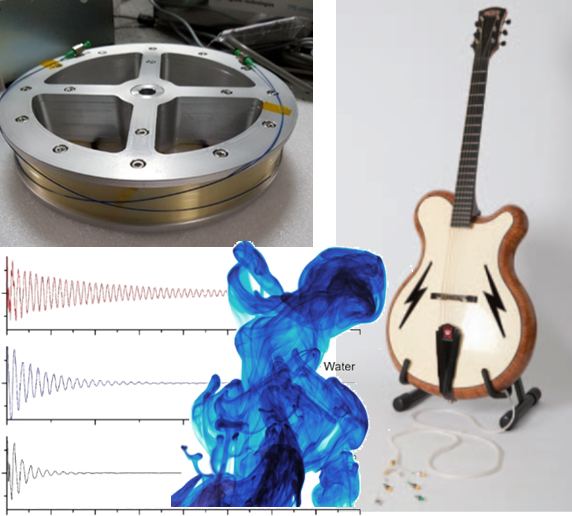
Fiber-optic interferometers and resonators are a key element for high-sensitivity accelerometers and sensors of mechanical strain. The ability of fiber Bragg gratings (FBG) to detect mechanical vibrations is also used for ultra-high fidelity amplification of acoustic musical instruments or to investigate the rheological properties of low-viscosity fluids, that are hard to measure with traditional methods.
Avino S. et Al., Opt. Expr. 19, 25057-25065 (2011)
Malara P. et al. SENS. AND ACT. A-PHYSICAL 264 219 – 223 (2017).
Lam, et al. Meas. Sci. Technol. 21, 094010 (2010).
Gagliardi et al. Science 330, 1081 (2010).
Electromagnetic sensing
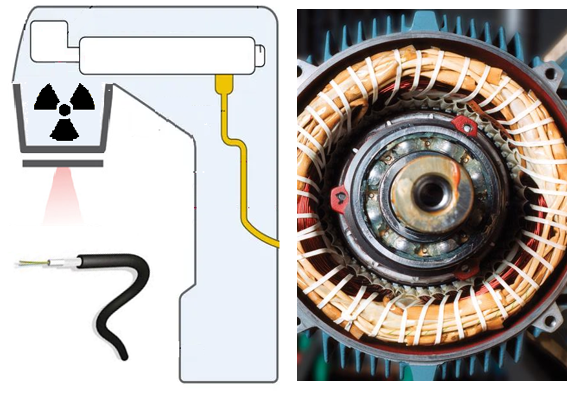
A fiber Bragg grating can operate as an electric field sensor by exploiting the electrostrictive effect. A great potential exists in field applications for voltage graduation in power generators. By using FBG Fabry-Pèrot resonators, we also measured the effect of ionizing radiation on the fiber material, demonstrating that it is possible to accurately measure the radiation doses delivered in radiotherapy.
Marignetti F., et Al. IEEE TRANS. ON IND. ELECT. 63 (5) 2796 – 2802 (2016)
S.Avino et Al.Appl. Phys. Lett. 103(18):184102 (2013)
S.Avino et Al. Sensors 15, pp. 4242–4252, 2015.
Sensors based on coupled fiber-optic resonators
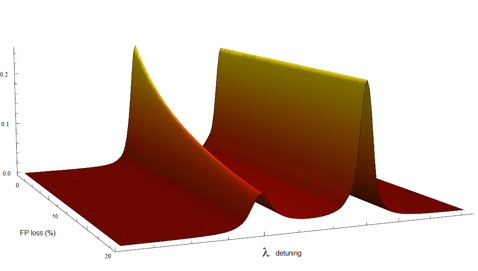
Mode coupling in fiber-optic resonators triggers several interesting phenomena, such as resonance splitting or coherent perfect absorption. In many cases these effects can be exploited to devise ultra-sensitive measurement schemes for fiber-optic sensors.
Malara P.,et Al. SCI. REP. 6 28947-1 – 289
Malara P.,et AL. OPT. LETT. 41 (7) 1420 – 1422 (2016)47-7 (2016)
Malara P. et AL. OPT. LETT. 40 (9) 2124 – 2126 (2015)
Fiber-optic sensors for chemical observables:
Optical fibers represent an ideal sensing platform also for chemical and bio-sensing, thanks to their microscopic size, low cost and biocompatibility. In our group, we exploit these capabilities by developing innovative measurement techniques for spectroscopy, plasmonics and biosensing applications.
Refractive index sensing of liquid samples
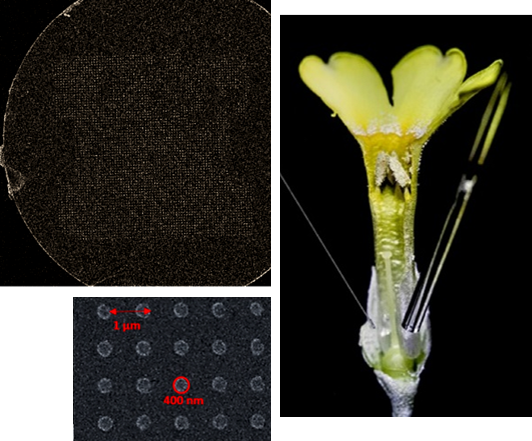
The capability of optical fibers to deliver light directly into liquid samples allows the most diverse applications. For example, it is possible to measure instantaneously and in-vivo the refractive index of floral nectar, unveiling unknown trends of its sugar concentration throughout the flower lifespan. Ultra-sensitive, plasmonic-assisted refrative index measurements can also allow the detection of contaminants or bio-targets in foods and beverages. For these applications, we developed a cavity-enhanced interrogation/readout scheme for fiber-optic plasmonic probes that sensibly boosts their refractive index resolution.
Aronne, G. and Malara, P. ,New Phytol. 224, 987-993. (2019)
Malara P. et al. Sens. and Act. B 273, 1587 – 1592 (2018)
Microdroplet FT spectrometers and spectrum analyzers
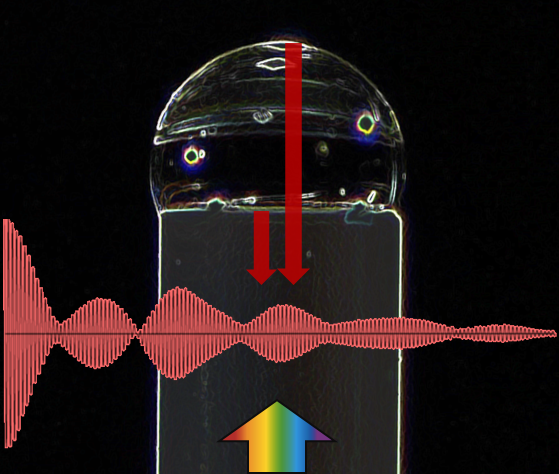
Ultra-Broadband spectrochemical analysis performed by exploiting the evaporation of a liquid drop on the tip of an optical fiber. Endowed with a proper data analysis procedure, this simple optofluidic system is equivalent to a miniaturized Fourier transform spectrometer, capable of operating automatically and with an extremely low production cost.
Malara P., et al. NAT. COMM. 11 (1) 2263-1 – 2263-5 (2020)
Capezzuto M., et al. Opt.lett. 47.1 102-105. (2022)
Spectroscopy of liquids with fiber-optic evanescent wave sensors
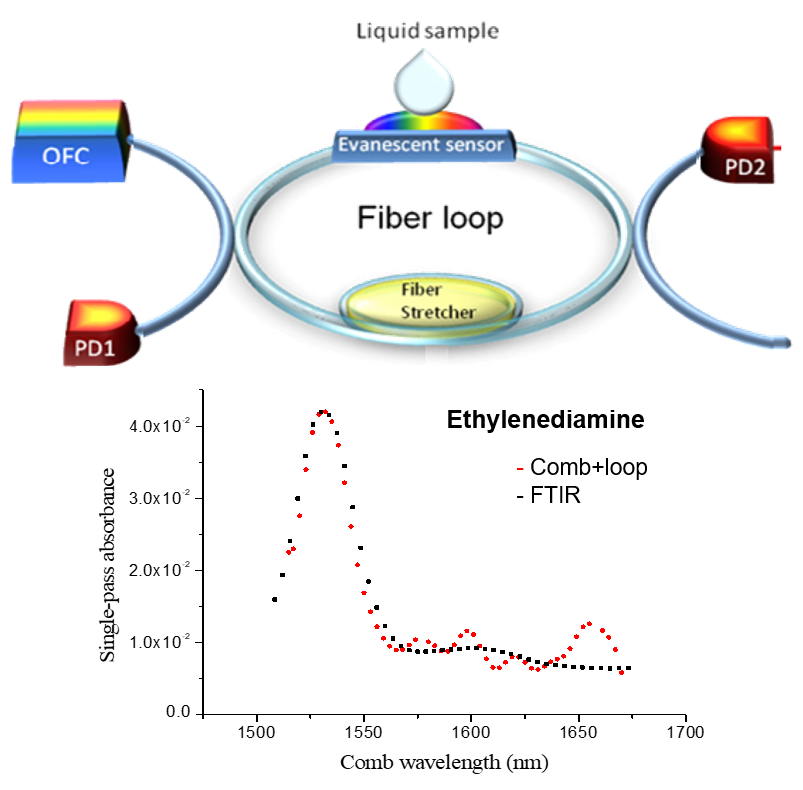
Fiber-optic evanescent wave sensors allow the interaction of light confined into an optical fiber with the external environment with extremely low loss. The evanescent sensor acts as a miniature probe which can be immersed in any liquid to perform optical spectroscopy and sensing in real-time. Potential applications include food and beverage analysis as well as water pollution monitoring.
Gangopadhyay T. K. et al. Sens Act. B, 206, 327-335 (2015).
Avino S. et al. Opt. Lett., 39, 19, 5725-5728 (2014).
Avino, S. et al. Appl. Phys. Lett., 102, 20, 201116 (2013) .
Sensors based on whispering-gallery mode microresonators:
Over the last few decades, optical WGM resonators allowed enormous progresses in a number of different fields of fundamental and applied science. At small length scales, from microns to millimeters, dielectric micro-sphere and microtoroids showed impressive Q-factors which were exploited for bio-chemical sensing, lasers and nonlinear optics experiments.
Liquid Droplet microresonators
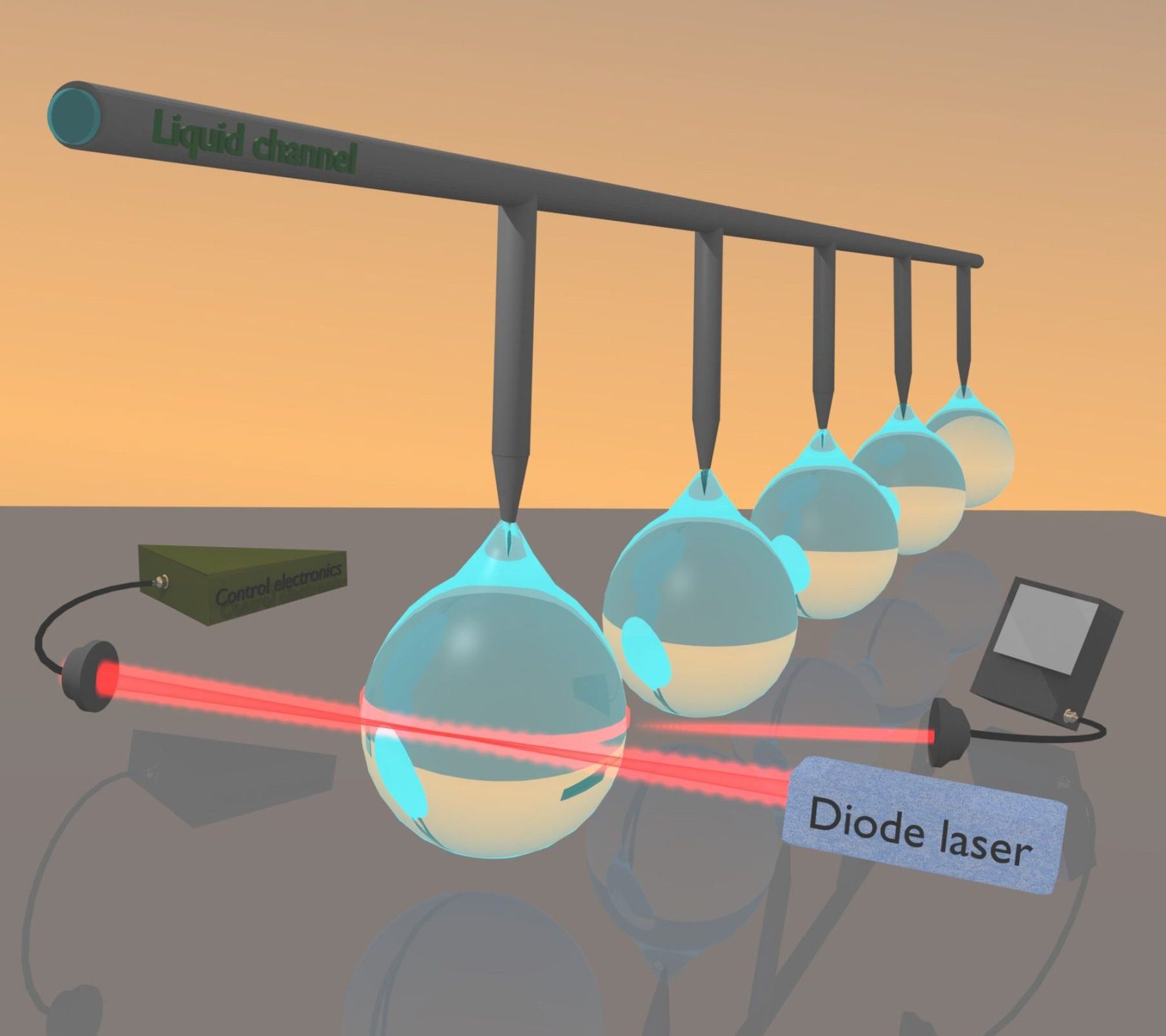
We explored the idea of liquid optical microcavities, i.e. a self-sustained drop of liquid where light can be trapped and resonate with very low loss, demonstrating, for the first time, the feasibility of droplets as passive sensors. Free-space light excitation of whispering-gallery modes and laser frequency locking on resonant modes is achieved, recording Q-factors ranging from 10^5 to 10^7 in the near-infrared and visible spectral regions. Liquid cavities are unique environments to investigate light–matter interaction and optomechanics
Zambrana-Puyalto X. et al. Laser & Photonics Reviews 2021, 15, 2000528. https://doi.org/10.1002/lpor.202000528
D’Ambrosio D. et al. Phys. Rev. A 104, 043504, https://doi.org/10.1103/PhysRevA.104.043504
Giorgini, A., et al. Physical Review Letters 120.7 (2018): 073902.
Avino, S. et al. Adv. Opt. Mater. 2, 1155 (2014)
Detectors based on solid microresonators
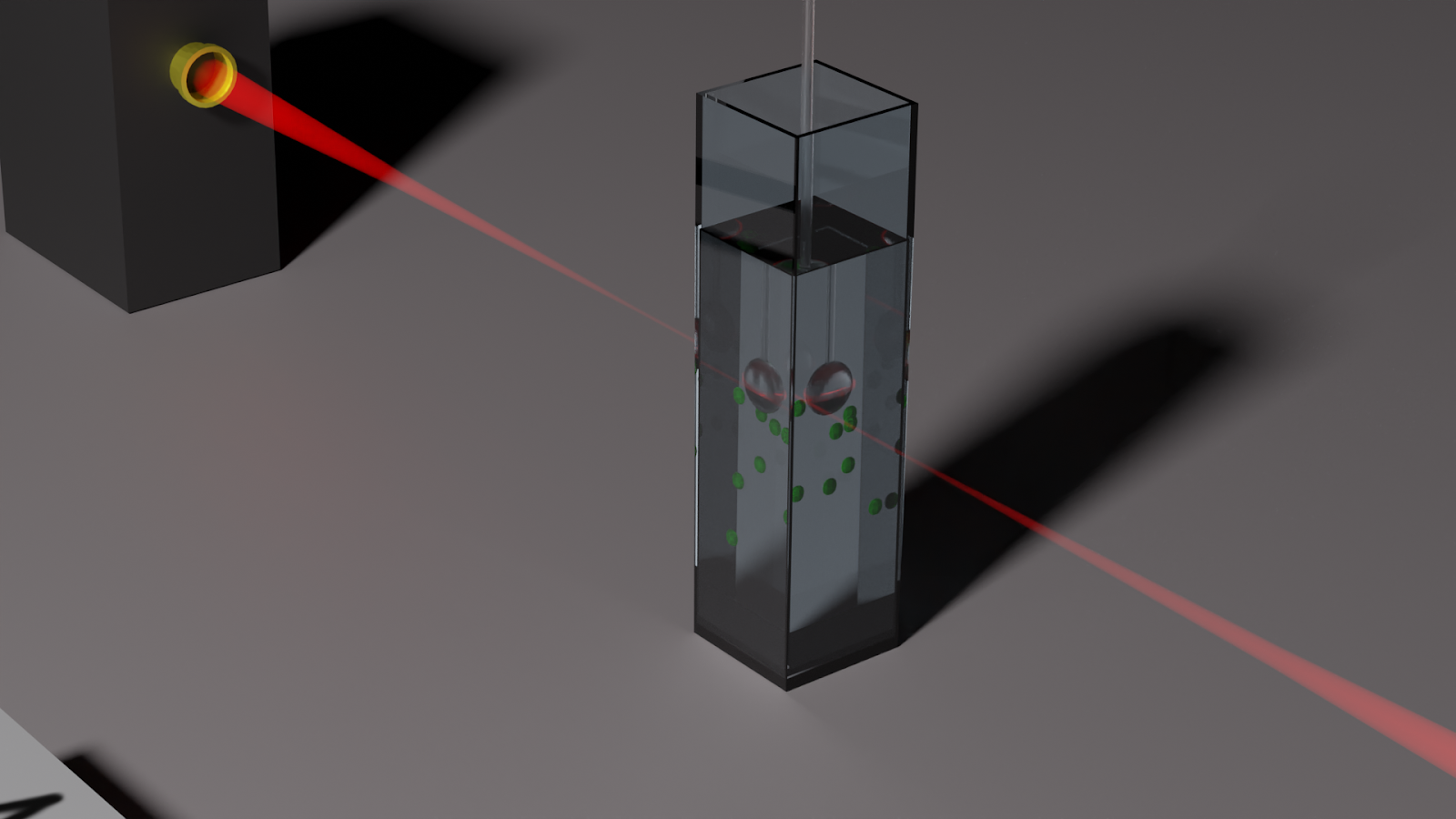
Silica microspheres immersed in aqueous solutions, excited in a free-space light configuration, represent a promising platform for biosensing applications. Even minute perturbations—such as the presence of a single nanoparticle or biomolecule—can alter the equatorial resonance conditions, thereby facilitating ultra-sensitive, precise detection. Thanks to unique interplay between geometry and material properties, WGMRs proved powerful tools for investigating light-matter interactions and developing advanced sensing technologies.
D. D’Ambrosio, S. Avino, G. Gagliardi, Direct Nanoparticle Sensing in Liquids with Free-Space Excited Optical Whispering-Gallery-Mode Microresonators. Sensors, 25, 5111 (2025) https://doi.org/10.3390/s25165111